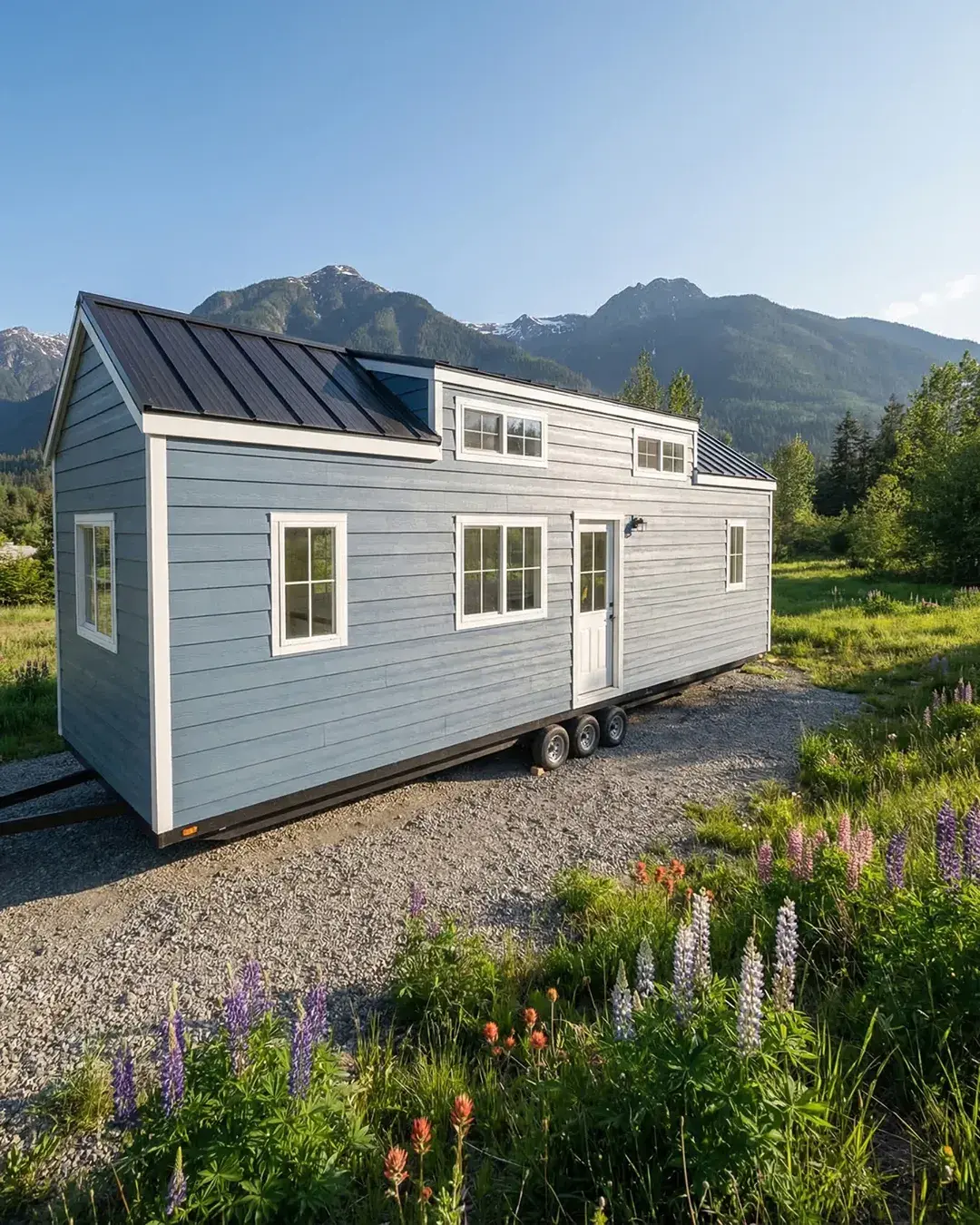
Can You Put a Tiny Home on Any Land in Texas?
Not quite — but Texas is one of the most flexible states in the country. The key distinction is whether your land is inside city limits (incorporated) or outside them (unincorporated). In unincorporated areas — which cover most of rural Texas — county rules apply, and many counties have minimal or zero restrictions on placing a tiny home.
Inside city limits, zoning laws govern what you can build. Most cities allow tiny homes in residential zones if they meet minimum square footage requirements (typically 320–500 sq ft). Always verify with the county appraisal district or planning office before you buy.
Step 1: Find the Right County
Some Texas counties are far more tiny-home-friendly than others. Counties with minimal restrictions include McLennan (Waco area), Hood, Erath, Bosque, and most of the Hill Country counties (Gillespie, Blanco, Kerr).
Avoid buying land in HOA-controlled subdivisions — most HOAs prohibit THOWs entirely regardless of county rules. Stick to raw, unimproved land with no deed restrictions for maximum flexibility.
Search tools like LandWatch, LandSearch, and Zillow Land allow you to filter by acreage and county. Budget at least 0.5 acres — 1–5 acres gives you room for future expansion, septic systems, and setback requirements.
Step 2: Check Zoning and Deed Restrictions
Before making an offer, do these three checks:
1. County appraisal district website — search the parcel number to confirm zoning classification (AG, residential, commercial, etc.). Agricultural land is typically the most flexible for tiny homes.
2. Deed restrictions — your title company or attorney will pull these. They override county zoning. Look specifically for language about "minimum dwelling size," "permanent foundation requirements," or "no RVs or manufactured homes."
3. Flood zone — check FEMA's flood map at msc.fema.gov. Flood zone properties can still be usable, but they affect insurance costs and may require elevation work.
Step 3: Understand Septic and Water
In most rural areas, you'll need to install your own septic system and source your own water. Here's what to budget:
Septic system: $8,000–$18,000 for a standard aerobic system. Required in most counties for any permanent or semi-permanent dwelling. Some tiny home owners use composting toilets to avoid this cost — check if your county allows it.
Water well: $5,000–$15,000 to drill and equip a residential well. Alternatively, haul water or collect rainwater — Texas has no restrictions on rainwater collection.
Electrical hookup: $2,000–$10,000 to connect to the grid depending on how far the nearest power line is. Off-grid solar is often cheaper and more practical on rural land.
Step 4: Site Prep and Placement
Once you own the land, you need to prepare the site before your tiny home arrives. This includes:
Clearing and grading: $500–$3,000 depending on how wooded or uneven the land is. You need a level pad for the home.
Concrete pad (if foundation-set): $2,000–$4,000 for a 300–400 sq ft pad. THOWs (on wheels) can be set on gravel or compacted caliche with leveling jacks — no concrete needed.
Driveway access: If your parcel doesn't have road access, budget $1,000–$5,000 for a gravel drive. County road access is free but may require a culvert permit.
Aura Tiny Homes coordinates delivery directly to your site and our team does a full walk-through to confirm the placement is level and utilities are set up correctly.
What Does Land Cost in Texas Right Now?
Land prices vary enormously by location:
Near Waco / McLennan County: $3,000–$8,000 per acre. Excellent market for STR income given Waco's tourism traffic.
Hill Country (Gillespie, Kerr, Blanco counties): $6,000–$20,000 per acre. Premium STR market — Fredericksburg sees some of the highest Airbnb nightly rates in Texas.
East Texas / Piney Woods: $2,000–$5,000 per acre. Less STR demand but very affordable for full-time living.
Far West Texas (near Big Bend): $500–$2,000 per acre. Extreme affordability, growing off-grid community, but very limited utilities.
A 1-acre parcel near Waco will typically run $4,000–$8,000 — far less than a lot in Austin or Dallas. Combined with a $90,000 Aura build, your all-in cost for a turnkey tiny home on land can be under $100,000.
The Fastest Path: Buy Land + Home Together
The simplest approach is to purchase land and a tiny home together as a package. Some buyers secure financing for both simultaneously through a construction-to-permanent loan or a land loan + chattel loan combo.
Aura Tiny Homes works with buyers throughout this process. We can connect you with land-savvy real estate agents in McLennan and surrounding counties, refer you to lenders who understand tiny home land packages, and coordinate delivery the moment your site is ready.
The entire process from land search to move-in day typically takes 4–6 months when you have financing in place.
RELATED GUIDES
Ready to Find Your Land + Build?
We work with buyers from land search to move-in day. Call us or request a consultation.