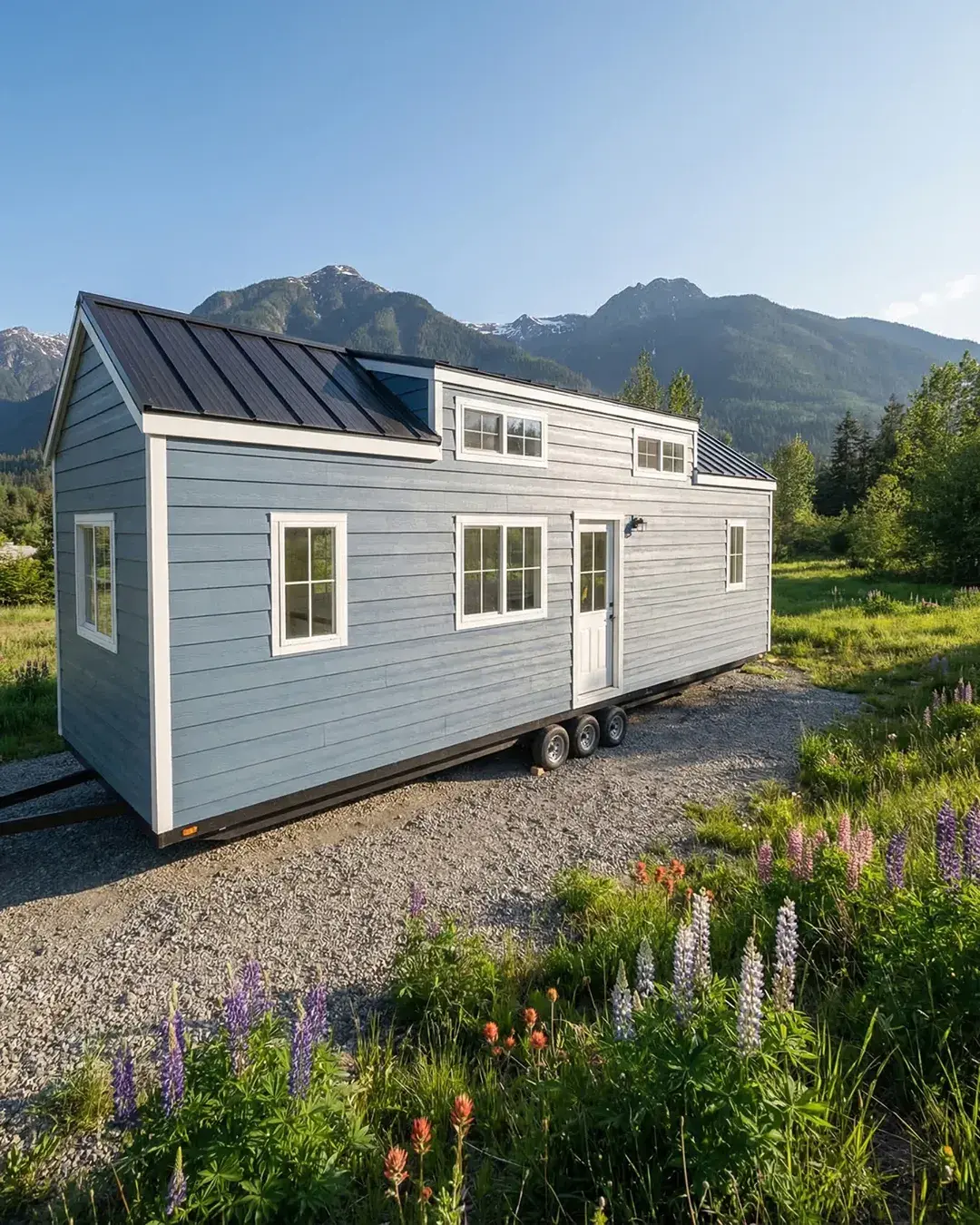
The Core Difference: What Actually Separates These Two?
People use "tiny home" and "manufactured home" interchangeably — they're not the same thing, and the difference matters a lot when it comes to financing, zoning, and resale value.
A manufactured home (formerly called a mobile home) is built to the federal HUD code, installed on a permanent or semi-permanent chassis, and typically ranges from 400 to 2,000+ sq ft. Lenders, county assessors, and insurance companies have clear categories for them.
A tiny home (under 400 sq ft, usually 150–400 sq ft) is built to either RVIA (RV Industry Association) or IRC (International Residential Code) standards depending on whether it's on wheels or a foundation. The category is newer, so rules vary more by county — but that's changing fast.
At Aura Tiny Homes, our units are RVIA-certified and built to IRC residential standards, which puts them in the strongest possible position for financing and legal placement.
Cost Comparison: Which Is Actually Cheaper?
Manufactured home (1,000–1,400 sq ft): $80,000–$160,000 installed Tiny home (200–350 sq ft): $65,000–$145,000 installed
Per square foot, tiny homes often cost more to build — but that's misleading. You're buying less land, paying lower property taxes, and spending far less on utilities monthly. The total cost of ownership over 10 years often favors the tiny home significantly.
For STR investors, a $95,000 tiny home generating $2,200/month in Airbnb revenue outperforms a $130,000 manufactured home generating $1,100/month in long-term rent. It's not even close.
Financing: Which Is Easier to Get a Loan For?
This is where most buyers get tripped up.
Manufactured homes have the most established loan options — FHA Title I & II, Fannie Mae MH Advantage, and conventional mortgages (if permanently affixed). Lenders know exactly how to handle them.
Tiny homes on wheels (THOWs) are typically financed as RVs or personal property loans — rates are slightly higher (7–12%) and terms shorter (5–15 years). If your tiny home is on a permanent foundation and titled as real property, you can access conventional and FHA loans just like a manufactured home.
Bottom line: Tiny home financing is improving fast. Aura's RVIA certification means our units qualify for RV loans through major lenders. And if you're placing on land you own, foundation placement opens full mortgage financing. Read our full tiny home financing guide for a detailed breakdown.
Zoning & Placement: Where Can You Put Each?
Manufactured homes are generally allowed in manufactured home parks, designated MH zones, and rural areas. Many suburban residential zones still restrict them — check your county's land use code.
Tiny homes have a patchwork of rules. Texas has become more tiny-home-friendly over the past five years, especially in rural counties. Waco, Austin, San Antonio, and surrounding areas have all expanded their ADU and THOW allowances.
Key Texas rules to know: - Most rural Texas counties (outside city limits) allow tiny homes on land you own - Many cities allow THOWs as ADUs or secondary dwellings - Foundation-placed tiny homes that meet IRC/HUD standards are treated as permanent structures
We've placed units across the Hill Country, East Texas, and Central Texas — if you have a specific county in mind, we can tell you exactly what's allowed. See our Texas zoning guide for county-by-county details.
Resale Value: Which Holds Its Value Better?
Manufactured homes traditionally depreciate like vehicles — especially older HUD-code units. Newer manufactured homes on permanent foundations in good neighborhoods hold value better, but they still rarely appreciate at the rate of site-built homes.
Custom tiny homes in the right market are a different story. Well-built, certified units from reputable builders are selling at or above original purchase price, especially as demand continues to outpace supply. STR-configured units with documented rental income command particularly strong resale prices.
The key is certification (RVIA or IRC), quality of construction, and placement. An Aura unit on owned land with a documented Airbnb revenue history is a genuine asset.
Which One Is Right for You?
Choose a manufactured home if: - You need more than 400 sq ft - You want the simplest financing path - You're placing in an established manufactured home community - Full-time family living is the primary use
Choose a tiny home if: - You want lower total cost of ownership - STR / Airbnb income is part of the plan - You value design, craftsmanship, and unique aesthetics - You're placing on rural land or as an ADU - You want something that feels like a real custom home, not a cookie-cutter box
Still weighing your options? Call us at (713) 589-0695 or email auratinyhomes1@gmail.com — we'll give you a straight answer based on your specific land and goals.
Frequently Asked Questions
Is a tiny home considered a manufactured home in Texas?
No. Manufactured homes are regulated under federal HUD code and are typically 400+ sq ft. Tiny homes under 400 sq ft are classified separately, either as THOWs (RVs) or as permanent dwellings if on a foundation. Texas has separate rules for each category.
Can I get a mortgage on a tiny home in Texas?
Yes, if it's placed on a permanent foundation and titled as real property. RVIA-certified units on wheels are financed as RV loans. Aura can walk you through the best path for your specific situation.
Do tiny homes appreciate in value?
Well-built, certified tiny homes from reputable builders are holding and appreciating in value, especially those with documented STR income. Quality of build and placement are the biggest factors.
What's cheaper — tiny home or manufactured home?
Manufactured homes are cheaper per square foot to build, but tiny homes have significantly lower operating costs (utilities, taxes, maintenance). For STR investors, tiny homes generate much higher revenue per dollar invested.
Ready to Build Your Custom Tiny Home?
Talk to our team — we'll tell you exactly what's possible on your land, at your budget.